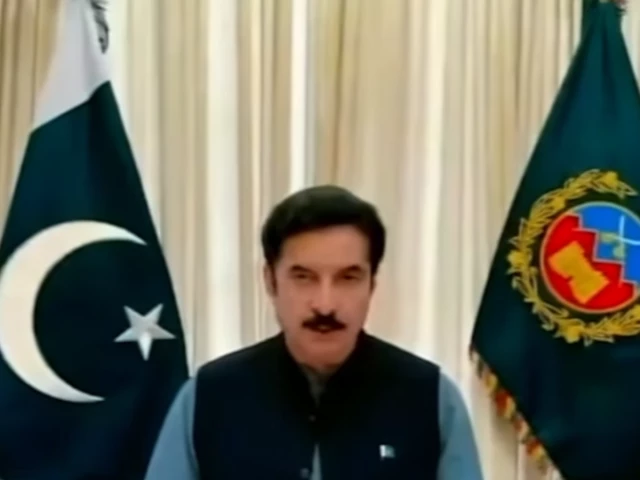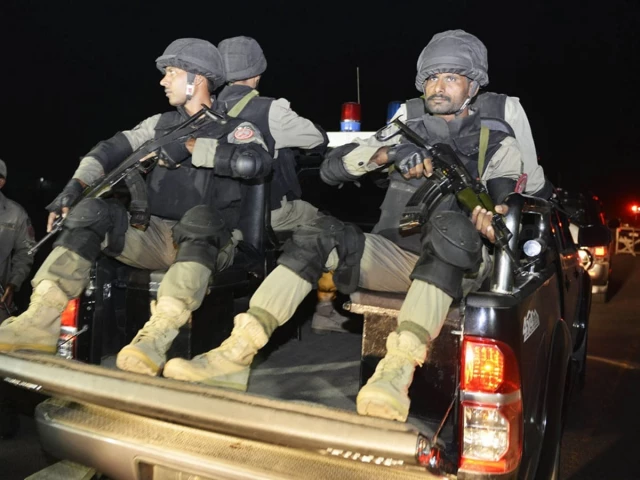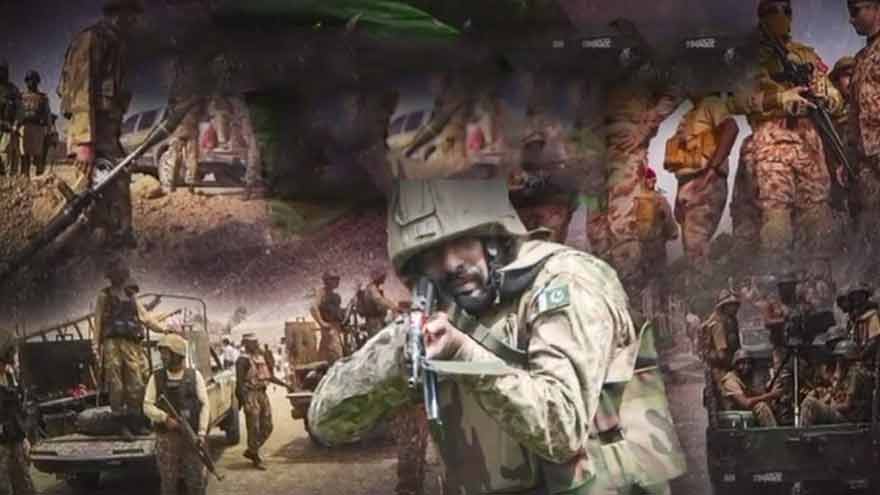
Operation Shaban, launched on July 5 in response to a wave of coordinated terrorist attacks across Balochistan that killed 42 people including 38 security personnel, enters its fifteenth day with security forces having killed more than 132 militants in the operation and concurrent intelligence-based operations since the campaign began on July 5 (Dawn; The Nation).
The ISPR has maintained throughout the operation that it will continue “until the last militant is eliminated.” Operational tempo since the second week has settled into a pattern of daily kills in single digits, consistent with an active clearing operation moving through successive areas rather than the concentrated engagements of the campaign’s opening days.
A two-front operation
Reporting by The Diplomat and the defence analysis publication Quwa identifies the feature that makes Operation Shaban structurally different from previous Balochistan counterterrorism campaigns: it is running simultaneously on two distinct fronts targeting two qualitatively different threats (The Diplomat; Shafaqna).
In the Pashtun-majority northern districts around Ziarat and parts of Loralai, the Army and Frontier Corps are targeting Tehreek-e-Taliban Pakistan cells using the mountainous terrain for staging and logistics. TTP is an ideologically jihadist group with a transnational network, Pashtun ethnic base and primary orientation toward the Pakistani state and its security apparatus. In the Baloch-majority southern districts around Lasbela, Khuzdar and Dera Bugti, operations target Balochistan Liberation Army networks. BLA is a secular ethno-nationalist insurgency rooted in Baloch grievances over resource extraction, demographic pressures and political under-representation; it has received documented support from elements across the border.
Previous Balochistan operations have typically targeted one actor at a time, allowing command structures, intelligence streams and operational approaches to be optimised for a single threat type. Running a simultaneous campaign against both TTP and BLA requires coordination between Army, Frontier Corps and police elements that do not share a unified command optimised for either group, separate intelligence networks with limited lateral sharing, and distinct post-kinetic approaches — given that TTP de-radicalisation frameworks do not apply to BLA and vice versa.
Exit conditions
The dual-front structure also complicates what “success” means for Operation Shaban. Victory against TTP cells in Ziarat does not resolve BLA activity in Lasbela; a cleared north does not secure the south. For the operation to achieve its stated goal of re-establishing the state’s writ across Balochistan, both fronts must be addressed on different timelines, with different political dimensions and different post-operation stabilisation requirements. Shafaqna Pakistan has described Shaban as potentially a “turning point for Balochistan peace” — an assessment that may be premature, but that reflects the operation’s unusual scope relative to its predecessors.