
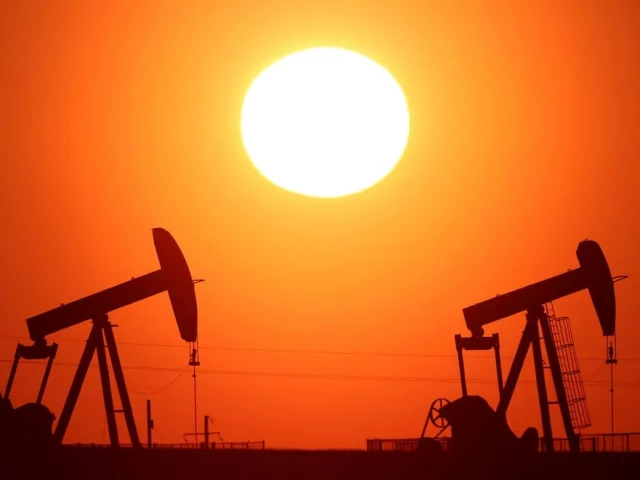
Oil prices fell on Thursday after a senior Iranian official said Tehran remained open to diplomacy to end the war (Express Tribune).
The move
| Benchmark | Price | Change | |—|—|—| | Brent crude | $102.16 a barrel | −92 cents (−0.9pc) | | WTI | $91.39 a barrel | −77 cents (−0.8pc) |
What Iran said
The official, who was not named, said Tehran was reviewing Washington’s response to peace proposals that prioritise lifting the US naval blockade on Iranian ports and reopening the Strait of Hormuz.
That is a narrower opening than the headline suggests. Iran’s president told the General Assembly this week that Tehran “would never surrender to US pressure”, and Iran’s security chief has said the Strait will not reopen until Iran’s conditions are met.
US Secretary of State Marco Rubio said negotiations would require “hard work over a period of time” and that military options remained available.
The two sides remain at war and, on the public record, far apart on how it ends.
What actually moved the price
“Oil is falling because the market is unwinding part of its geopolitical risk premium as Gulf supply recovers,” said Priyanka Sachdeva, head of market insights.
That is the more useful explanation, and it points at supply rather than diplomacy. A risk premium comes off when barrels reach the market, not when an official gives an interview.
Why it matters here
Pakistan is a net energy importer and prices fuel off a seven-working-day average of international product prices. The averages behind Thursday’s cut at home were $131.20 a barrel for petrol and $118.94 for high-speed diesel.
Crude at $102 is still historically high. What has changed is the direction, and it has fed through to the pump twice this week — petrol to Rs390.12 and diesel to Rs414.75.
It has also fed through to the stock market. Business Recorder attributed part of Wednesday’s 830-point rise in the KSE-100 to easing oil prices and improving US-Iran dynamics.
[Image: Reuters via The Express Tribune]



