
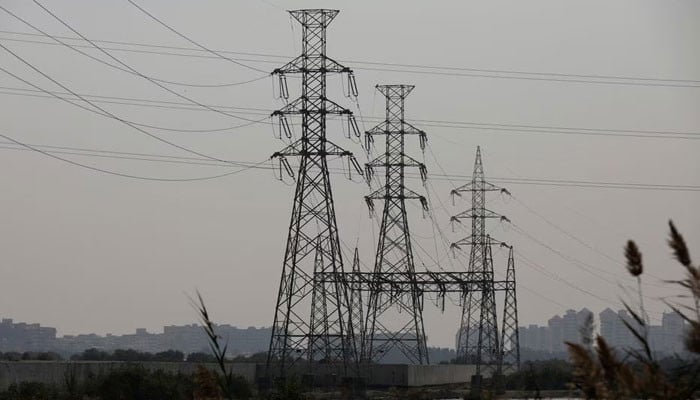
Pakistan’s power regulator has already notified its overhaul of how electricity distribution companies are judged — this is a decision taken, not a proposal out for consultation (Geo News).
The National Electric Power Regulatory Authority issued the Performance Standards (Distribution) Regulations, 2026 as S.R.O. 1430(I)/2026, dated 25 August 2026. The notification and the full 68-page text are published on Nepra’s own website.
They come into force with immediate effect and apply to all distribution licensees — the ten ex-Wapda Discos and K-Electric.
What actually changes
Not licensing, not unbundling, not tariff methodology — this is a performance-standards regime.
The regulations set seven Guaranteed Performance Standards and sixteen Overall Performance Standards, and impose hard annual ceilings on outages per consumer. A low-voltage rural consumer may not lawfully suffer more than 80 unplanned long-duration interruptions totalling 175 hours a year — that is 7.3 days without power. The urban low-voltage limits are 60 interruptions and 88 hours. At 132/66kV the caps drop to six interruptions and 26 hours.
Restoration clocks are equally specific: four hours for an urban fuse-off, two hours for an urban cable breakdown where alternate supply exists, eight hours to replace an urban distribution transformer. Compliance is required in 100 percent of cases.
The scorecard
Every Disco must file a quarterly performance scorecard marked out of 100 — at sub-division, division, circle and company level — within 15 days of each quarter’s end.
The weights are supply reliability 35, consumer service 30, technical quality 20, advanced metering 10 and distributed energy, EV and transparency 5. Ratings run from A (90-100) to D (below 60).
A company scoring below 50 percent on reliability alone draws an automatic show-cause notice regardless of its overall grade. Reliability, the text says, “shall not be offset by higher performance in other clusters.”
The catch
The compensation Geo highlighted is the part that does not start yet. Regulation 1(2) states the rules take effect immediately “save that Regulation 13 shall come into force after two years” — and Regulation 13 is the compensation clause. Consumer payouts therefore begin in August 2028. Scorecard rating consequences are also deferred until the fifth quarter, to let licensees build data baselines.
When it does bite, Schedule I sets Rs50,000 per hour of excess outage for industrial consumers on dedicated feeders, Rs100,000 per breach of load-shedding priority and Rs250,000 a quarter for misreporting reliability data. Crucially, Regulation 13(4) bars Discos from recovering any of it through tariff — it must come out of their allowed return.
Geo, citing The News — the two are the same Jang group masthead, and no other national daily has carried the regulations — reported that they replace a framework dating to 2005. The SRO text itself makes no reference to 2005 and contains no express repeal clause.
Alongside the sale
The rules land as three Discos are being marketed. Dawn reported on Sunday that the Privatisation Commission has pushed the Iesco expression-of-interest deadline from 7 September to 21 September (Dawn), a two-week extension. Private participation is being sought in Fesco, Gepco and Iesco, with 51-100 percent of share capital and management control on offer. Ten of twelve interested parties — three Turkish firms and seven Pakistani groups — were prequalified for the Fesco sale on Saturday (Dawn).
No source links the two processes. The regulations do note that Nepra may build a performance-based incentive mechanism into the multi-year tariff framework — the same framework K-Electric cited when it withdrew from the Fesco race, telling Dawn its audited accounts could not be finalised until its own multi-year tariff was.
What remains untested is enforcement. On The News’s account, the regime it supersedes was binding on paper too.



