
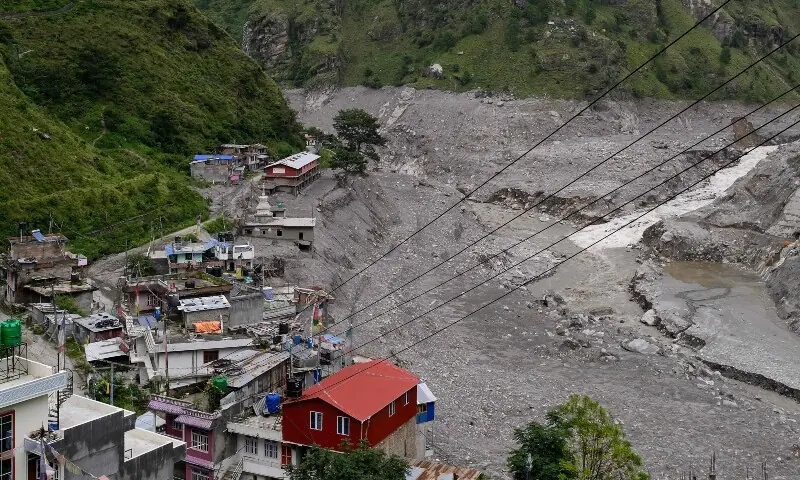
At least 1,252 people have been killed in Nepal by the flooding that followed the 26 August glacier collapse, with 4,216 still missing (Dawn; figures corroborated against the compiled record of NDRRMA and Chinese state media releases).
More than 5,000 people have been injured. A preliminary government estimate puts the damage at around Rs200 billion (roughly $1.3bn).
On the Chinese side, 21 deaths are confirmed in Tibet, with 541 missing.
The trajectory
The toll has climbed steeply. This newspaper reported 987 dead in Nepal on 1 September, when the combined figure first passed 1,000. It is now 1,252 in Nepal alone — a rise of more than 260 in two days, as search teams reach areas that were cut off.
The missing number is the one to watch. At 4,200-plus in Nepal and 541 in Tibet, it remains several times the confirmed dead.
The housing
7,500 houses have been completely destroyed, “either washed away or buried under debris and mud”, said Dharma Raj Upreti, chief of the National Disaster Risk Reduction and Management Authority.
Around 20,000 houses in total will need rebuilding — and, critically, rebuilding in safer locations. That is a resettlement problem rather than a construction one, and it is the harder of the two.
Foreign Minister Shisir Khanal told ambassadors: “We anticipate that the resources required for rebuilding will be substantial.”
Pakistan’s response
Prime Minister Shehbaz Sharif told Nepal’s ambassador Rita Dhital that Pakistan would dispatch emergency relief assistance later this week, according to the Prime Minister’s Office. No quantity or composition was specified.
The cause, again
A glacier on Mount Langtang Lirung fractured at roughly 5,200 metres, producing an ice-rock avalanche that became a debris flow. Nepal’s prime minister has used the disaster to press for climate action; the hazard — high-altitude ice destabilising above populated valleys and hydropower sites — is the one Himalayan states have been warning about for a decade.
[Image: aerial view of houses damaged and deluged in sludge after flash floods at Syabrubesi in Nepal’s Rasuwa district on 3 September. Reuters, via Dawn.]
[Image: Reuters via Dawn]



