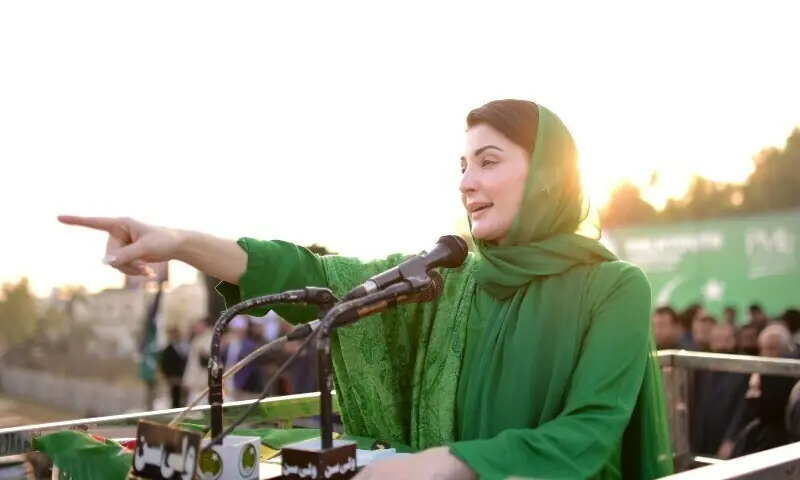
The Khyber Pakhtunkhwa Assembly has passed a resolution seeking Article 6 proceedings against Punjab Chief Minister Maryam Nawaz (Dawn).
Law Minister Aftab Alam Afridi moved it on Friday. It carried by majority.
What the resolution says
That such statements could “harm national unity, spread hatred among the provinces and undermine the federation”. It also paid tribute to those killed fighting terrorism.
What set it off
The chief minister’s remark that Punjab faces a greater security threat from neighbouring provinces than from neighbouring countries, and that terrorism enters Punjab across provincial borders.
What was said in the house
Housing Minister Amjad Ali called the statement “shameful and insulting”: “She must apologise on the floor of the house for saying that Punjab faces threats not from India but from other provinces.”
Information Minister Shafi Jan suggested the remarks could be “used against Pakistan in the International Court of Justice”.
ANP’s Muhammad Nisar called it “an insult to the people of KP and Balochistan”.
PML-N’s Amna Sardar defended the chief minister, saying her remarks were being “misread and misrepresented”, and that the word “Pakhtun” had been inserted by treasury members.
What Article 6 actually covers, because this matters
Article 6 defines high treason: abrogating, subverting, suspending or holding the Constitution in abeyance — or attempting or conspiring to do so — “by use of force or show of force or by any other unconstitutional means”. The punishment under the High Treason (Punishment) Act, 1973 is death or life imprisonment.
It is the provision written for coups. A political remark, however offensive to a province, is not an attempt to subvert the Constitution by force, and no reading of the article reaches it.
And a provincial assembly cannot start it
Proceedings for high treason can only be initiated on a complaint by the federal government. A resolution of a provincial assembly has no legal effect on that, and the KP Assembly has no power to set it in motion.
So the resolution is a political act using constitutional vocabulary. That is worth naming plainly, and it is worth naming in both directions: the grievance underneath it is real and documented — Khyber Pakhtunkhwa bears by far the heaviest toll of terrorism in Pakistan — but reaching for the treason article to express it devalues the article.
Article 6 has been invoked seriously in Pakistan’s history perhaps twice. Each time it is deployed rhetorically, the next serious use is a little cheaper.
The escalation, step by step
This newspaper has reported the sequence: opposition parties demanded a withdrawal on 6 September; the Peshawar High Court Bar Association demanded an unconditional public apology on 8 September, and Punjab’s information minister replied that the remarks were being given “a provincial and ethnic colour”.
Nine days on, the demand has moved from an apology to a treason resolution.
What is not established
No apology, withdrawal or clarification has come from the chief minister herself. The Punjab government has not responded to the resolution, and the federal government has said nothing about it. The exact vote count was not reported.
[Image: Dawn/File]