
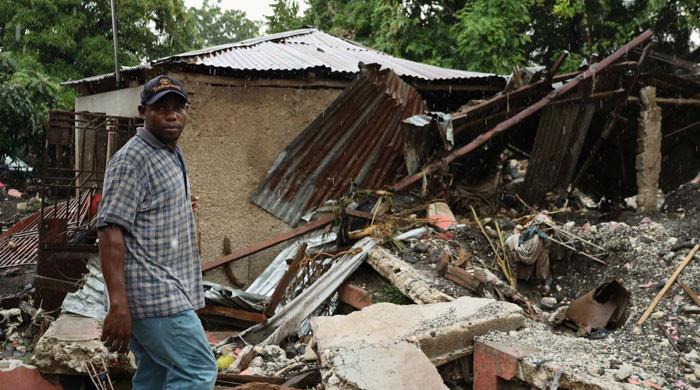
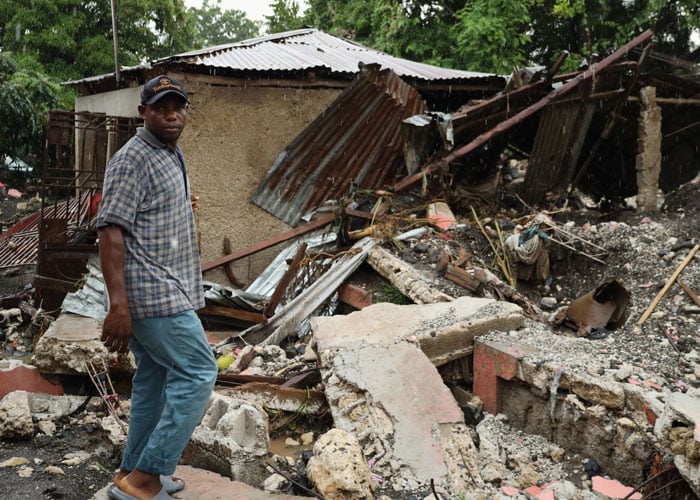
- At least 25 confirmed dead in Haiti and 19 in Jamaica.
- Forecaster estimates damages up to $52 billion.
- Melissa among the strongest storms ever to make landfall.
PORT-AU-PRINCE/KINGSTON/HAVANA: The confirmed death toll from Hurricane Melissa rose to 44 on Thursday, according to official reports, after it wreaked havoc across much of the northern Caribbean and picked up speed as it headed toward Bermuda.
Jamaica’s Minister of Information said Reuters At least 19 deaths had been confirmed, but authorities were continuing search and rescue efforts. The storm left hundreds of thousands without power, tore roofs off buildings and littered fields with debris.
The Jamaican military has called reserve personnel to report for duty to assist in relief and rescue operations.
Melissa made landfall in southwestern Jamaica on Tuesday as a powerful Category 5 hurricane, the Caribbean country’s strongest storm to make a direct landfall and the first major hurricane since 1988.
Wind speeds were well above the minimum level for the strongest hurricane classification. AccuWeather forecasters said it tied for second-strongest Atlantic hurricane on record in terms of wind speed when it made landfall.
The forecaster estimated $48 billion to $52 billion in damage and economic losses in the western Caribbean.
Authorities in Haiti, which was not immediately hit but still suffered days of torrential rain from the slow-moving storm, reported at least 25 deaths, mostly in the southern town of Petit-Goave when a river burst its banks.
A river also receded and washed away part of a highway, local newspaper Le Nouvelliste reported. The road, weakened by last year’s Typhoon Beryl, connected to the nearby town of Jacmel.
Melissa also hit eastern Cuba, where about 735,000 were evacuated, but as of Thursday, no deaths were reported there, despite widespread damage to homes and crops.
At 8 p.m. (0000 GMT), Melissa was a Category 1 storm 409 km (254 miles) southwest of the British Isles in the North Atlantic, where hurricane conditions were expected into the evening, even as Melissa’s eye moved northwest.
Melissa had maximum sustained winds of 105 mph (169 kph).
However, residents in Bermuda remained calm as the storm was expected to give the island a relatively wide reach. Authorities said they would close the runway Thursday night and close schools and ferries Friday “out of an abundance of caution.”
In the Bahamas, which Melissa made landfall on Wednesday night, authorities lifted storm warnings but did not give the “all clear.” An official said authorities are expected to decide by Saturday whether it is safe for the hundreds of people evacuated from the affected islands to return home.
Walking barefoot in the mud
The front page of Thursday’s Jamaica Observer newspaper read: “DISASTER.”
Populous Kingston escaped the worst of the damage. Its main airport was due to reopen on Thursday, as was the capital’s port. Relief flights and aid had begun to flow into Jamaican airports, authorities said.
But across the country, more than 130 roads remained blocked by trees, debris and power lines, authorities said, forcing the military to clear roads on foot in isolated areas, with ambulances following close behind.
Satellite images showed parts of trees and houses damaged in the worst affected areas of Jamaica, sparse remaining greenery stripped and most structures destroyed.
In one of the island’s Montego Bay neighborhoods, 77-year-old Alfred Hines waded barefoot through thick mud and debris as he described his narrow escape from rising flood waters.
“At one stage, I see the water around my waist and (after) about 10 minutes, I see it around my neck here and I’m running away,” he told Reuters on Wednesday.
“I just want to forget about it and let things go back to normal.”
In the western parts of the island, people flock to supermarkets and gas stations to fill up on supplies.
“Montego Bay has no gas. Most gas stations are out of business,” British tourist Chevelle Fitzgerald told Reuters, adding that it took her at least six hours to travel the 174 kilometers (108 miles) to the Jamaican capital.
“The freeway was closed. You had some roadblocks and trees down,” he said.
More than 70 percent of electricity customers in Jamaica remained without power as of Thursday morning, Energy Minister Daryl Vaz said, as power lines fell on the island’s streets.
Many schools remained without power or water, officials in the capital Kingston said.
Immediate humanitarian aid
Scientists say hurricanes are intensifying faster with greater frequency as a result of warming ocean waters caused by greenhouse gas emissions. Many Caribbean leaders have called on the rich, heavy-polluting nations to provide reparations in the form of aid or debt relief.
Despite the UN creating a fund for developing countries to quickly access reliable financing for more extreme weather events in 2023, donations have not met targets.
U.S. weather forecaster AccuWeather said Melissa was the third most intense hurricane seen in the Caribbean, with its slower movements exacerbating damage in affected areas.
US search and rescue teams headed to Jamaica on Thursday to help with recovery efforts, Jamaican authorities said. US Secretary of State Marco Rubio said the US is ready to provide “immediate humanitarian assistance” to the people of Cuba, a longtime US enemy.
Authorities in Cuba – which Melissa hit overnight as a Category 3 storm – said they were “waiting for clarification on how and in what way they are willing to help”.
At least 241 Cuban communities remained isolated and without communication Wednesday after the storm passed through Santiago province, according to preliminary media reports, affecting up to 140,000 residents.
Residents of Santiago, Cuba’s second largest city, began returning to repair their homes. Authorities had evacuated 735,000 people to shelters outside the typhoon’s cone and moved tourists in northern areas to inland hotels.
a href=”https://www.geo.tv/latest/631371-hurricane-melissas-death-toll-climbs-to-44-storm-churns-north”>Source link



