

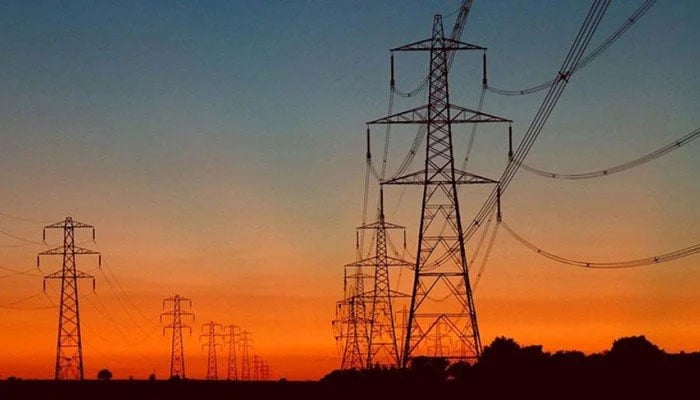
- Losses from theft, old networks, poor maintenance practices: report.
- Adds disco recovered only 93.5% of billed revenue, widening the debt gap.
- Consumer complaints rise over overcharging, faulty meters, outages: Nepra.
ISLAMABAD: Discos performance contributed about Rs 397 billion to Pakistan’s circular debt in fiscal year 2024-25 as inefficiencies in power distribution companies and persistent transmission bottlenecks continued to cause heavy losses, according to a report issued by the National Electricity Regulatory Authority (Nepra).
In its State of the Industry Report 2025, the energy regulator warned that inefficiencies are entrenched in the pricing system, with losses usually passed on to consumers through higher electricity prices, The News was mentioned.
The report states that revenue recovery also remained stagnant during the period as Discos could only collect about 93.5% of the bills, leaving a large gap between revenue and revenue collected.
He added that this shortfall ran into hundreds of billions of rupees and directly fueled circular debt, the unpaid bills that ripple up the energy production chain, from fuel suppliers to power producers.
During the year 2024-25, the weak performance of Discos alone added about Rs 397 billion to this debt, the report said. The report warned that inefficiency has become “normal” in the pricing system. Losses caused by poor performance are usually adjusted to electricity prices, while utilities face little penalty for missing targets.
According to the report, inefficiencies have removed incentives for improvement and allowed mismanagement to continue.
Electricity demand peaked at just over 33,000 megawatts, while installed capacity stood at 41,212 megawatts, leaving large plants idle but still paid for through consumer tariffs. At the same time, the transmission system cannot carry enough cheap electricity from efficient plants due to congestion and delays, the report said.
It added that combined transmission and distribution losses in public sector utilities reached about 16.4%, well above the permissible limit of 11.77%. These losses came from theft, outdated networks and poor maintenance. Instead of being absorbed by utilities, the cost is passed directly to consumers who pay through higher bills.
Transmission failures have also added another layer of cost. The main transmission lines are still underutilized due to delays and restrictions, even though payments are made as if they are fully functional. This prevented cheap electricity from reaching consumers and forced the system to rely on more expensive options.
According to the State of the Industry Report 2025, rigid electricity contracts also emerged as a burden. Under long-term “take-or-pay” agreements, the government must pay power producers even when the facilities are not in use.
Several thermal plants were operating at low capacity but still received full payments, pushing tariffs higher. The government has terminated contracts for about 2,829 megawatts of unused capacity, which Nepra estimates could save over Rs 900 billion over time.
Nepra also recorded a rise in complaints, mainly over overcharging, faulty meters and long power outages. Frustrated households and businesses are increasingly turning to rooftop solar to escape high costs and unreliable supply.
The report said Pakistan’s installed generation capacity was 41,121 MW as of June 30, 2025, up from 45,888 MW a year earlier, after 2,829 MW of inefficient plants were withdrawn or decommissioned. The decrease was partially offset by the addition of 884 MW from the Suki Kinari hydroelectric project.
However, capacity cuts have failed to address the industry’s key problem, underutilization. Thermal and nuclear plants operating under the CPPA-G system recorded an average utilization factor of just 38.82% during the year.
This low utilization has kept capacity payments persistently high, despite excess capacity.
According to Nepra’s report, capacity purchase price (CPP) averaged Rs 14.21 per unit, making it the single largest component of electricity tariffs and accounting for a significant share of the total cost of generation – about 82% of the consumer tariff.
The main driver remains “Take or Pay” contracts, under which electricity producers are paid regardless of whether electricity is sent.
Several independent power producers (IPPs) approached Nepra during the year to reduce their tariffs, a move expected to provide long-term financial relief. However, the gains from these reductions had been largely offset by the “poor performance” of public sector power plants.
Major facilities such as the 747 MW Guddu power plant and the 969 MW Neelum Jhelum hydroelectric plant, along with several Hydel plants operated by Wapda, continued to operate below capacity.
He added that lower availability and inefficiencies translate into higher system costs, preventing tariff cuts from being fully passed on to consumers.
The report said additional cost pressures came from operational penalties. Part Load Adjustment Charges (PLAC) amounted to Rs. 46.4 billion during the year 2024–25, while the cost of lost non-project volume (NPMV) amounted to Rs.13.3 billion.
While both are down from last year, they remain largely avoidable through better system design and demand-side management.
Significant transmission assets remained underutilized during the year, inflating tariffs without delivering commensurate value.
a href=”https://www.geo.tv/latest/645603-discos-performance-piles-rs397bn-onto-circular-debt-in-fy24-25-nepra”>Source link


