
Akram immigrated to Australia in 1998 and visited India six times after immigrating
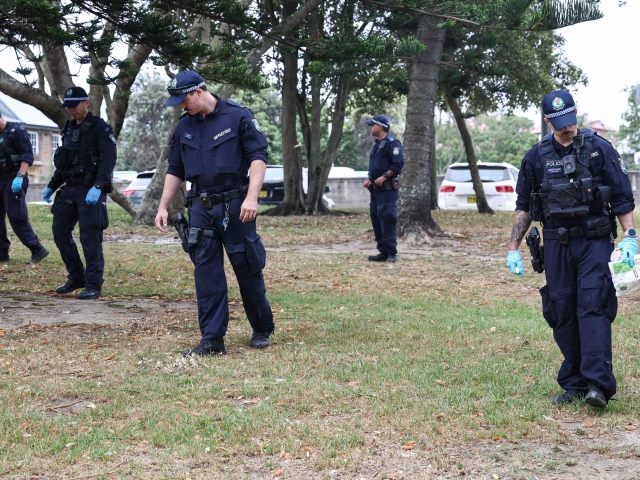
Police search for evidence around the area where the shooting took place at Bondi Beach in Sydney on December 16, 2025. Australia’s leaders agreed to toughen gun laws after attackers killed 15 people at a Jewish festival on Bondi Beach, the worst mass shooting in decades in what authorities described as anti-Semitic “terrorism”. Photo: AFP
Indian police said on Tuesday that one of the two gunmen behind the mass shooting at Bondi Beach in Australia, Sajid Akram, was an Indian citizen who had fled the country 27 years ago.
Akram and his son Naveed — who is listed in Australian immigration records as an Australian citizen, according to authorities — opened fire on people celebrating the Jewish holiday of Hanukkah on Sunday, killing 15 people.
“Sajid Akram hails from Hyderabad, India. He migrated to Australia in search of work approximately 27 years ago in November 1998,” police in India’s southern state of Telangana said in a statement.
Reading: Bondi Beach attack probe leads Australia to India
“According to information available from his relatives in India, Sajid Akram has had limited contact with his family in Hyderabad for the past 27 years,” the statement added.
“He visited India six times after immigrating to Australia, mainly for family reasons such as property matters and visiting his elderly parents. It is understood that he did not travel to India even at the time of his father’s death.”
#BREAKING: Telangana Police in India has officially confirmed that Bondi Beach Sydney shooter Sajid Akram hailed from Hyderabad, India and migrated to Australia in 1998. Sajid Akram held an Indian passport but son Naveed is an Australian citizen. pic.twitter.com/F3SOwnnrzT
— Aditya Raj Kaul (@AdityaRajKaul) December 16, 2025
Australian Prime Minister Anthony Albanese said the father and son who carried out one of the country’s deadliest mass shootings were driven by the “ideology of the Islamic State”.
Authorities said the attack was designed to sow panic among the nation’s Jews.
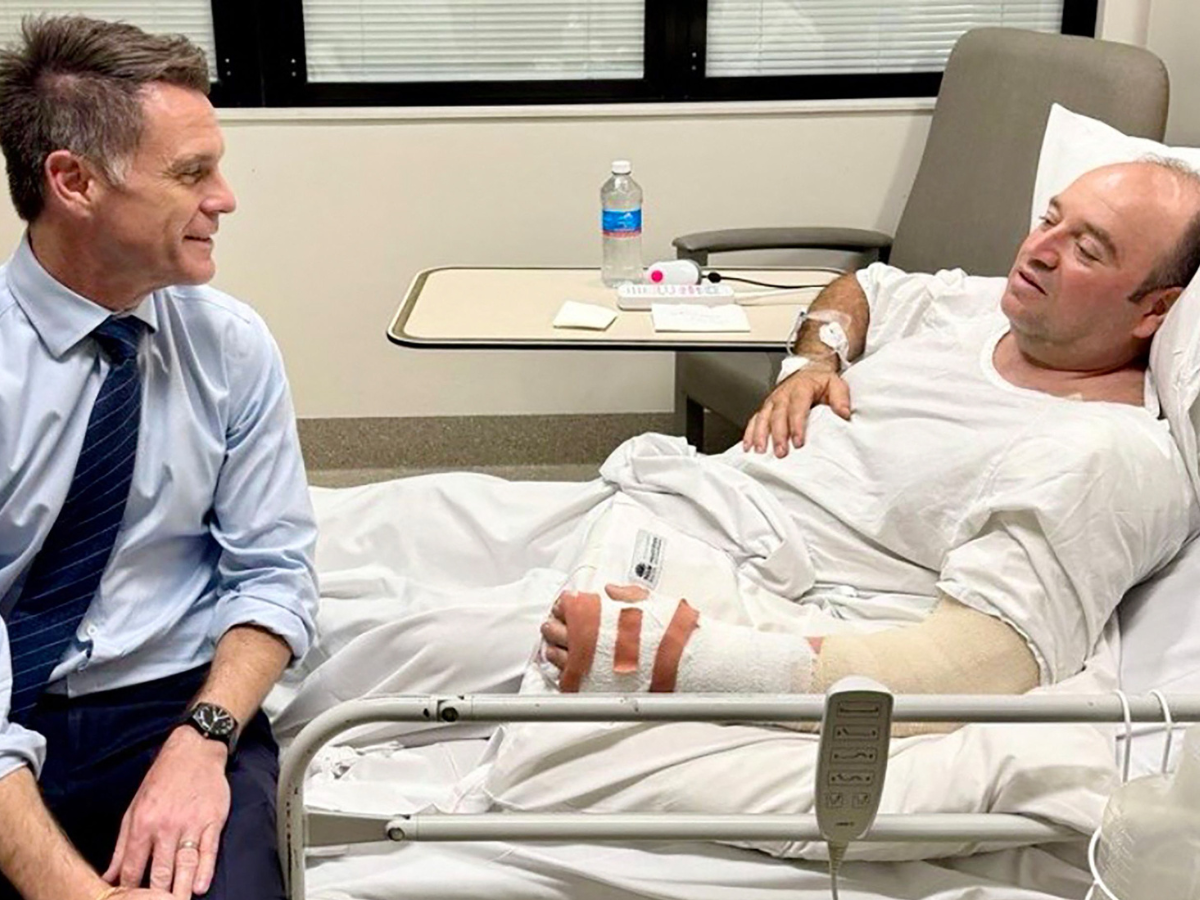
New South Wales Premier Chris Minns (L) talks to Ahmed Al Ahmed, the man who confronted and disarmed one of the Bondi Beach attackers, at St George’s Hospital in Sydney. Photo: AFP
The Telangana police said they had “no adverse history” against Sajid while he was in India before his departure.
“Family members have expressed no knowledge of his radical mindset or activities, nor of the circumstances that led to his radicalization,” the statement said.
“The factors that led to the radicalization of Sajid Akram and his son Naveed do not appear to have anything to do with India or any local influence in Telangana,” he added.
The couple traveled to the Philippines before the shootings and authorities are investigating whether they encountered Islamic extremists during the trip, Australian media reported.
Manila’s immigration department confirmed to AFP that the couple spent almost all of November in the Philippines, with their final destination listed as Davao.
The province, on the southern island of Mindanao, has a long history of Islamist insurgencies against central government rule.
The authorities knew the perpetrator
Police found a car registered to Naveed Akram parked near the beach, with improvised bombs and two “homemade” Islamic State flags inside, NSW Police Commissioner Mal Lanyon said.
Authorities are also facing growing questions about whether they could have acted sooner to prevent the attack.
Albanese said Naveed Akram, reportedly an unemployed bricklayer, had come to the attention of Australian intelligence in 2019 but was not considered an imminent threat at the time.
“They interviewed him, they interviewed his family, they interviewed people around him,” Albanese said.
Read also: 11 dead and dozens injured in shooting at Sydney’s Bondi Beach
“He did not appear to be a person of interest at the time.”
Naveed reportedly told his mother on the day of the attack that he was leaving town for fishing.
Instead, authorities believe he was hiding in a rented apartment with his father.
Wielding long guns, they peppered the beach and a nearby park with bullets for 10 minutes before police shot and killed 50-year-old Sajid.
Naveed, 24, remains in a coma in hospital under police guard.
Stricter gun control?
A 10-year-old girl and two Holocaust survivors were among the dead, while 42 others were rushed to hospital with gunshot wounds and other injuries.
Australian leaders agreed on Monday to toughen laws allowing father Sajid to own six guns.
Mass shootings have been rare in Australia since a lone gunman killed 35 people in the tourist town of Port Arthur in 1996.
That attack sparked a major global crackdown that included a gun buyback plan and limits on semi-automatic weapons.
But many Australians now question whether these laws are equipped to deal with online sales and the steady increase in privately owned guns.
“This horrible situation now, makes me personally feel that they should be stricter,” David Sovier, 43, of Bondi Beach, told AFP.
Pensioner Allan McRae, 75, said “not many people need a gun”.
“It would reduce the chance of it happening if more people had reduced access to a gun,” he told AFP.
The attack also revived claims that Australia is dragging its feet in the fight against anti-Semitism.
“Over the past four years I have been very clear. And I have been very clear about the dangers of rising anti-Semitism,” Israel’s ambassador to Australia, Amir Maimon, said during a visit to a memorial for the victims on Tuesday.
Israeli Prime Minister Benjamin Netanyahu said Australia’s decision to recognize Palestinian statehood this year added “fuel to the fire of anti-Semitism”.
Australians have been queuing up to give blood in record numbers, with more than 7,000 donors on Monday, according to the Australian Red Cross.
A makeshift flower memorial next to Bondi Beach has grown, with mourners gathering to pay their respects to the victims.
a href=”https://tribune.com.pk/story/2582461/bondi-mass-shooting-gunman-sajid-akram-was-from-hyderabad-india”>Source link



