
KARACHI:
“We will continue to dance. We will continue to resist.” Sima Kermani’s war cry echoed in my ears as I took a second to process where I was. A sea of saffron, in keeping with this year’s color palette, overwhelmed me as I squinted against the scorching sun. I was there. I was in Aurat March.
As of 2018, there is a palpable sense of anticipation when International Women’s Day rolls around. The feeling is indescribable because of the combination of different emotions. fear, anxiety, eagerness and excitement. Every year, the protest causes trouble before and after it takes place. Posters spread like wildfire, video clips go viral and the mudslinging continues until April, if not beyond. However, the feeling of being at Aurat March – as it happens – is always unparalleled.
The capital of Karachi

Entering Frere Hall through the media gate, I was greeted by a sparse crowd. It was understandable, given that I was quite early. I smiled briefly when my eyes fell on the waving flag of Palestine in the background. However, the feeling of comfort that enveloped me quickly left my system. While making my way to the main stage area where the tent was set up, I was stopped in my mind by a terrifyingly eerie sight. A sea of graves greeted me – bloodstained, topped with fresh rose petals. a smell vaguely reminiscent of cemeteries.
The cemetery of the patriarchate, as the dose was called, paid tribute to all those who had lost their lives to patriarchal violence. From the 25-year-old Dalit cotton worker involved in bonded labor who was raped and killed by her feudal lord, to the 21-year-old who committed suicide due to threats from her partner to reveal her photographs. A two-day-old Palestinian baby murdered in cold blood by the Israel Defense Forces, each grave was a symbol of how widespread and indiscriminate patriarchal violence really is.
A few steps further, a headless mannequin of ‘Pidar Shah’ caught the eye. Decked out in sturdy shoes, the sign next to the symbol of a patriarchal figure suggested his cause of death was “feminist witches.” Attendees could throw paraphernalia accompanying the mannequin at it to their heart’s content.
The wall of resistance, which simply challenged those present, “How do you resist?” was another highly interactive attraction. A great sense of catharsis could be achieved by picking up a marker and filling this canvas that essentially doubled as an outlet in which to release bottled up rage. Answers such as “longing” and “educating myself” were heartwarming to read, while other answers danced to a cheekier tune.
Inside the stage, Sheema jee taught the art of ‘dance as resistance’, encompassing the audience as onlookers looked on with polite excitement. An experienced player of the Aurat March, Sheema jee whipped the crowd into a frenzy and as the sound of the dhol added to the rhythm of the class, a resounding shout of cheers painted the stage in a movement of peaceful solidarity.
The requirements
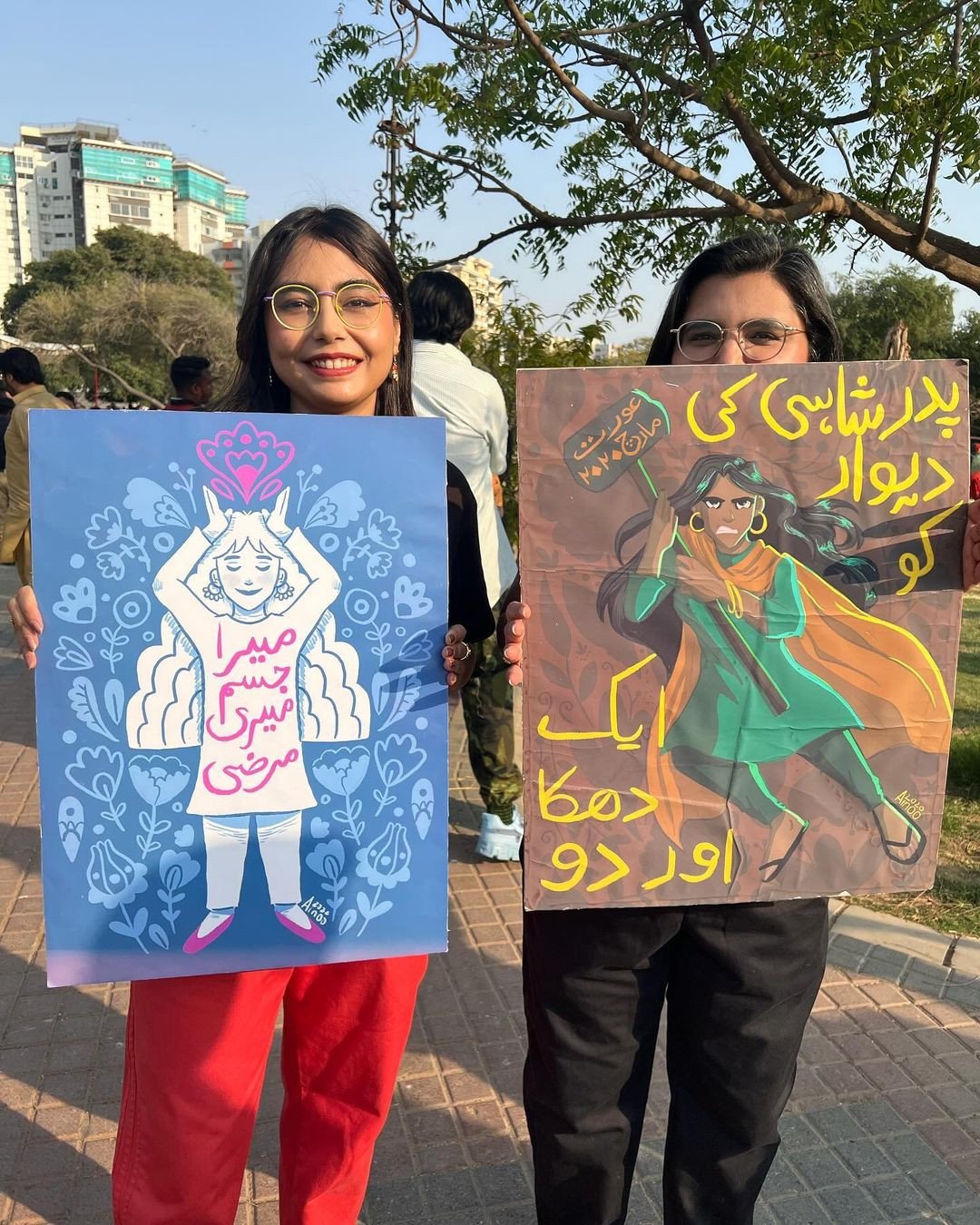
This year, Aurat March passionately advocated for the implementation of the Domestic Workers Act, 2018, urging the Sindh government to expedite the registration of workers. The petition called for the establishment of a social security fund and benefits that would protect mainly female domestic workers from exploitation. In addition, an impassioned appeal was gathered on the escalating issue of missing persons in Balochistan. Acts of censorship, surveillance, abductions and killings of activists, journalists and political workers nationwide were strongly condemned
The call for an end to the abduction, harassment, forced marriage and sexual grooming of girls and women from religious minorities, particularly Christians and Hindus, was echoed in the map of demands. The march highlighted the urgent need for the anti-forced conversion law to protect vulnerable people and ensure their right to freely choose their faith and life partners.
The organization also called for the restoration of democracy, along with the establishment of state-funded safe houses and hostels as a critical step in providing shelter to women, transgender and non-binary people facing patriarchal violence at home. The 2024 petitions also urged the federal government to support the Transgender People (Protection of Rights) Act 2018, protecting the right of people to be recognized based on their self-perceived gender identity. The call to action also condemned online hate campaigns and extreme violence targeting the Khawaja Sira community.
Why are we marching?
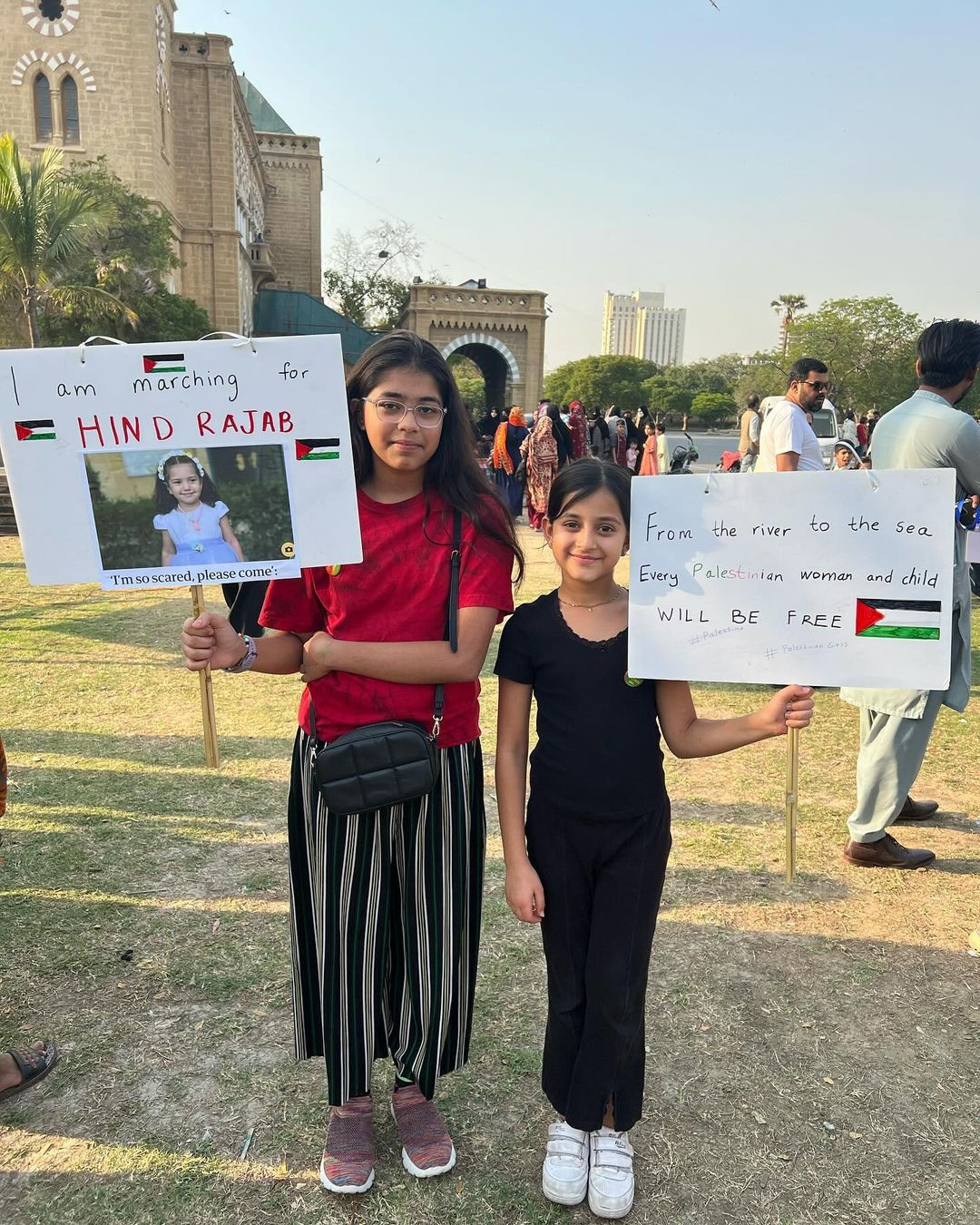
The Procession was strict about media attendance this time, with many being shown the door. This was, of course, by design, since in previous years, videos of the event have been released or edited, putting those involved in harm’s way. The protest also tends to spark political outrage, making the issue of tight security more pressing.
So it was no surprise that many were reluctant to talk about why they were there. With faces covered and requests that names be omitted, few spoke The Express Tribune. “I’m so happy to be part of a generation that speaks out against injustice,” said 29-year-old Ayesha Izhar. “I love the fact that my generation questions everything instead of accepting what the oppressor dictates. We have made it clear that we did not inherit our mothers’ silence.”
Speaking passionately about the need to support women as equal members of society, Sheema jee asked, “Who suffers when there is violence?” He added: “We must continue to protest.” Lawyer Sheeraz Khan Soomro, who believed that women were the source of many life lessons, further stated, “Why does it challenge our masculinity to think about women’s rights? Women are the best part of our society.”
Another one down
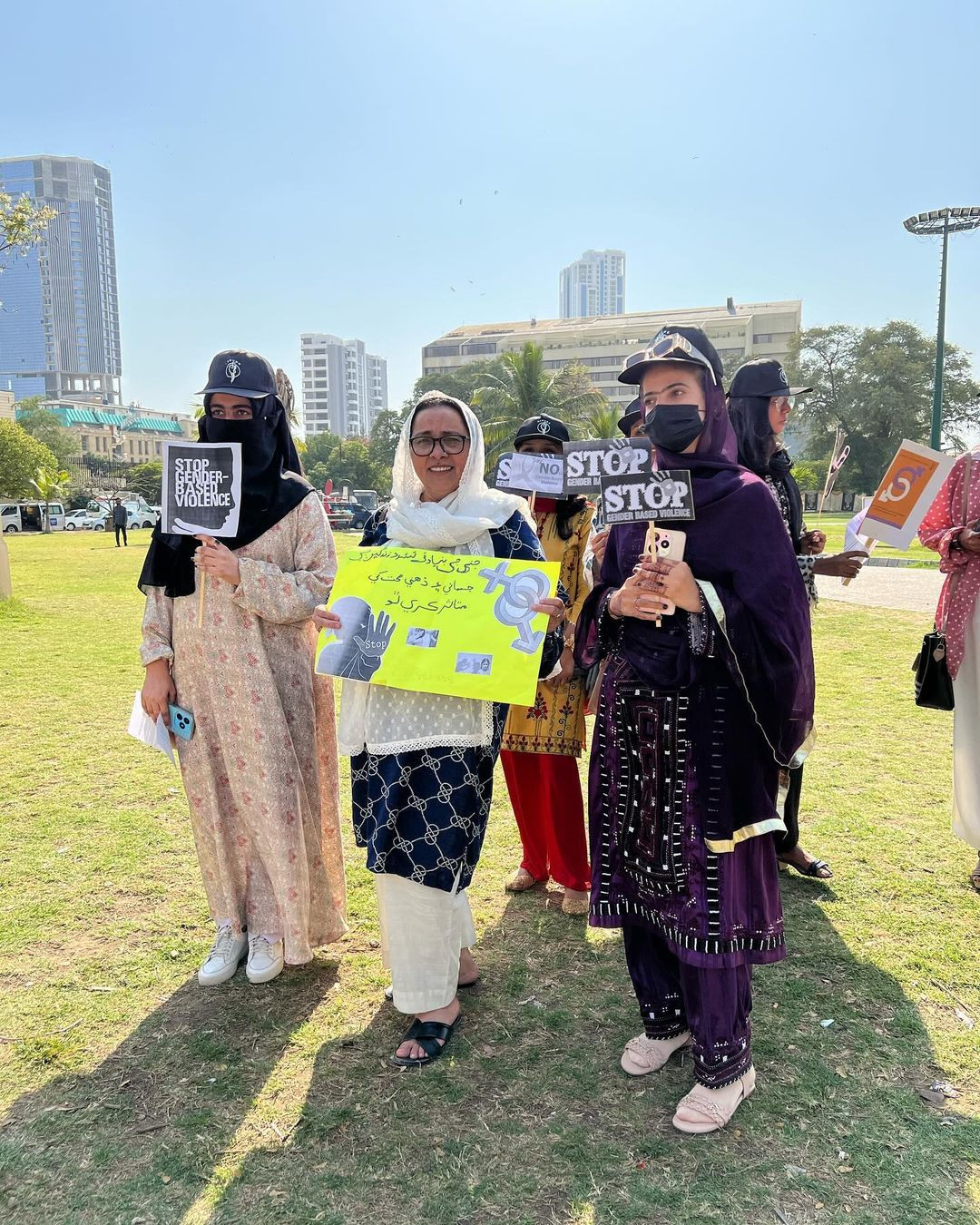
What started as a collective aimed at defending women’s rights in 2018 has turned into a fierce movement by 2024. As the years pass, the Aurat March evolves, experimenting with ways to become more inclusive and accessible, while ensuring that the event will still be a safe space.
To achieve the same, with varying degrees of success, every year in a city like Karachi – and across the country, for that matter – is a tall order. However, as difficult as things are, an invisible thread binds the Aurat March community together, attracting members every year as the season of revolution approaches.
Do you have anything to add? Share it in the comments
a href=”https://tribune.com.pk/story/2458843/aurat-march-2024-serene-solidarity-soul-stirring-installations”>Source link


